Doors do more than open and close
A door has several jobs at once. It separates spaces, controls sound and privacy, guides light, defines the style of a room and, on the outside, keeps weather and intruders out. Because people touch doors many times a day, small details such as weight, smoothness and sound of the latch are felt more than they are noticed.
When homeowners plan a renovation, doors are often treated as an afterthought, picked from a catalog at the end. That approach usually leads to mismatched styles, awkward swings and hardware that does not feel right. A better approach is to treat the doors as part of the room design, so that style, finish and operation work together.
This guide covers the main interior door styles, how they differ in feel and function, and how to choose hinges, handles and finishes. It also touches on humidity, which affects wood and metal in a South Florida house, and it links to related pages such as our service overview on interior doors and trim.
Start by walking through the house and noticing every door you touch in a day. Which ones stick, which ones slam, which ones swing into furniture, and which ones you wish had a window? Make a short list. Those notes become your brief, and they keep the project grounded in how you live instead of in the look of a showroom.
Bring photographs of any door you admire, along with measurements of the existing openings. Standard interior doors come in common widths and heights, but older houses and some condos have odd sizes that need custom work. Knowing this early tells you whether you are choosing from stock options or planning for made to order pieces, which changes both the selection and the schedule.
Panel doors: the traditional choice
Panel doors are built from a frame of rails and stiles with recessed or raised panels in between. They range from a simple two panel design to six panel and more detailed styles. The shape gives a door depth and shadow lines, and it suits traditional, transitional and many casual interiors.
A panel door has a visual rhythm that interacts with trim and walls. The more panels, the more traditional and busy the look. Fewer panels read cleaner and more modern. Because the panels are separate pieces set in a frame, the construction allows the wood to move with humidity changes, which helps the door stay stable.
Painted panel doors hide small flaws and clean up well, while stained doors show the grain and call for a more careful finish. Consider the weight as well: solid panel doors feel substantial and block more sound, while hollow panel doors are lighter and less expensive. Our paint sheen guide offers advice on finishing a painted door.
Wood species and material also play a part. Solid wood doors can be beautiful but react to humidity, while engineered cores resist movement better. Composite and fiberglass options exist for locations where moisture is a concern. Ask what the core and facing are made of, how the door is sealed on its top and bottom edges, and what finish it arrives with, since unsealed edges are a common route for moisture to enter.
Flush doors: simple and contemporary
A flush door has a flat face with no panels, which gives a clean, modern look. Flush doors can be hollow, with a light internal structure, or solid, with a heavier core. Hollow flush doors are common because they are light and economical, but they transmit more sound. Solid or solid core flush doors feel more substantial and block more noise.
Because the surface is flat, a flush door shows its finish in a plain way. Paint, veneer, laminate and stain all look different on a flat face, and imperfections in the surface or the edges are more visible. If you choose flush doors, ask about the core material, the face material and how the edges are finished.
Flush doors work well in rooms where a simple look is the goal, such as bedrooms, bathrooms and closets. They can also be combined with flush trim for a modern line. In humid places, ask how the door resists moisture, especially in bathrooms where steam is regular, and think about ventilation as described in our page on poor ventilation in bathrooms.
Think about the edges and the gaps as part of the style. A flush door usually looks right with tight, even reveals, and a small difference in the gap along the top becomes noticeable on a plain face. Plan for a gap at the bottom as well, since air return paths, flooring thickness and rugs all affect it. Your contractor can tell you how much clearance the flooring plan leaves.
Glass doors and doors with glazing
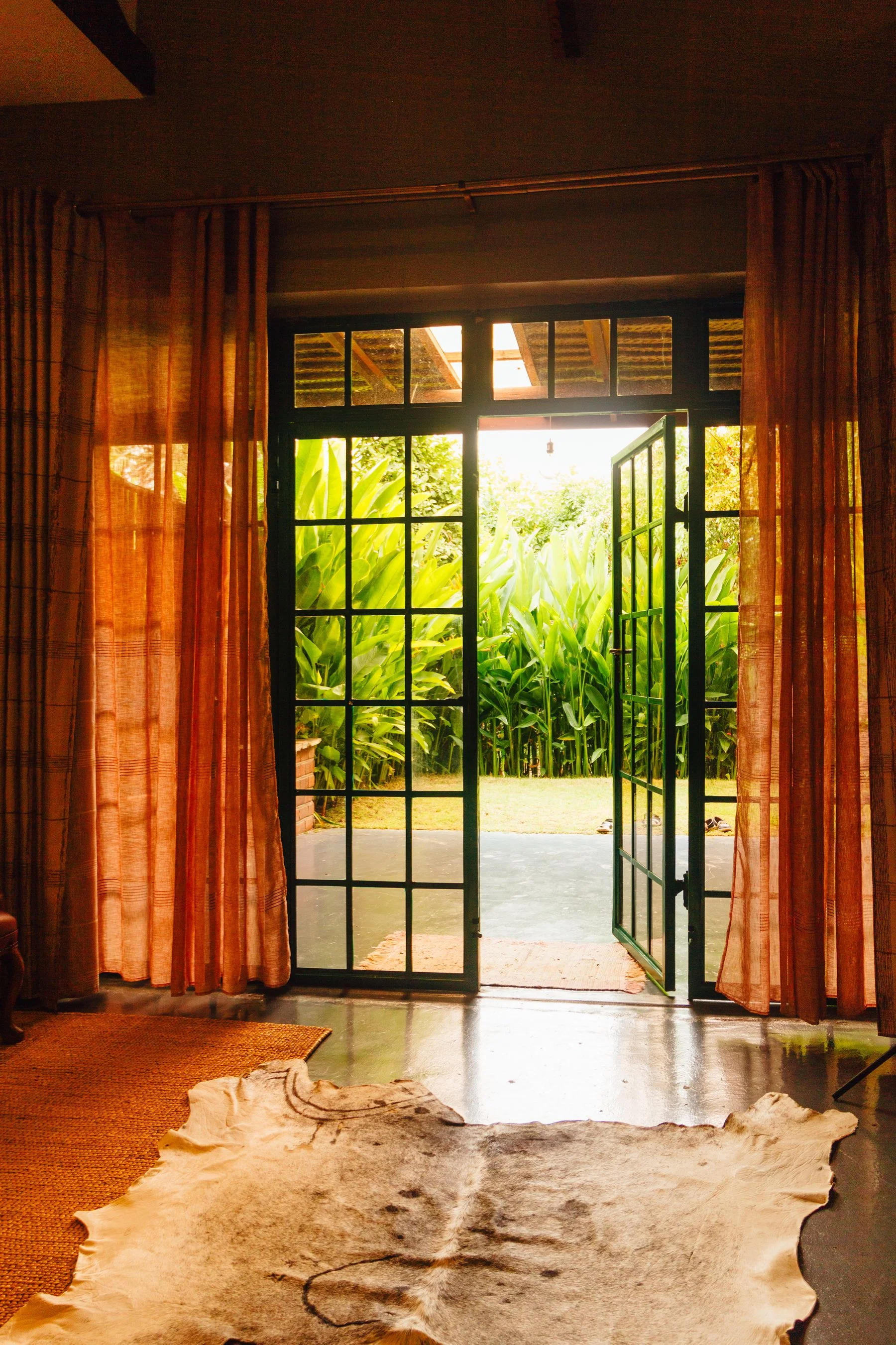
Glass changes the feel of a door. A door with glass panels lets light pass between rooms, which helps interior spaces that would otherwise be dim. French doors, with multiple panes in a frame, create a classic connection between rooms, while a door with a single large pane looks modern and open.
Privacy and safety are key questions. Clear glass offers no privacy, while frosted, textured or reeded glass lets light through and blurs the view. Glass in doors is usually safety glazing, and requirements vary by location and use, so ask your contractor or your city building department what applies to your doors.
For exterior locations, glazing becomes a bigger decision, because it relates to wind, rain and security. Our pages on patio and French door installation and sliding versus French doors go into exterior glazing, and the entry door replacement page covers the front door. Interior glass doors are a design choice, while exterior doors carry additional performance questions.
Consider how a glass door affects sound and light at night. A glass door between a hallway and a bedroom can let light spill in, and it carries voices more than a solid door. In an office or a nursery, that may matter. Glass can also reveal what is behind it, so think about whether the view into a closet or utility space is something you want to display.
Sliding, pocket and barn style doors
Not every door swings. Sliding and pocket doors save floor space, which helps in tight rooms, closets and bathrooms. A pocket door slides into a cavity in the wall and disappears when open, while a surface mounted sliding door rides on a track on the wall and covers part of the wall when it opens.
These doors have trade offs. A pocket door needs a wall that can hold the cavity and hardware that can be reached for service. It may not seal as well for sound and privacy as a swinging door. Surface sliders can look stylish, but they need clear wall space and leave a gap at the edges. Ask how the hardware will be adjusted and replaced later, since moving parts wear over time.
Our comparison of pocket doors versus swinging doors walks through the choices. If a door opening changes size or location, the wall framing and electrical may be affected, and your contractor will plan that during the rough stage. Requirements for structural changes vary by city, so ask your city building department.
- Pocket doors suit tight spaces but need a suitable wall cavity.
- Surface sliders add style and need clear wall space beside the opening.
- Swinging doors seal better for sound and privacy.
- Bifold doors suit closets but limit how much of the opening is usable.
- Always ask how moving hardware will be adjusted or replaced.
Hinges: the quiet part that matters
Hinges carry the door's weight and determine how it swings. A heavy door needs three or more hinges, and the hinge size should match the door's weight and thickness. Loose or undersized hinges lead to sagging, rubbing and latches that no longer line up.
Hinge finishes should match the handles and the style of the home. Ball bearing hinges move smoothly on heavy doors and last longer, while standard hinges are fine on lighter interior doors. Square corner hinges look crisp and modern, while rounded corner hinges look traditional.
In a coastal or humid environment, hinge material matters. Some metals tarnish or corrode with salt air, and finishes can fail sooner. Ask your contractor which materials and coatings suit your location. Our guide to salt air and home materials explains why this matters, and the same thinking applies to exterior door hardware.
Hinge screws deserve attention too. Short screws that grip only the door jamb can pull loose as the door cycles, especially on heavy doors, while longer screws that reach the framing behind the jamb hold better. This is the kind of installation detail that a careful carpenter handles automatically, and it is a fair question to ask when you compare contractors, since it is invisible once the door is hung.
Handles, knobs and levers
Handles come in a few forms. Knobs are the traditional form, but they require gripping and twisting, which can be hard for people with limited hand strength. Levers are easier to operate with a push or a pull, and they are often easier for children and older adults. If accessibility is a goal, lever handles are worth serious thought.
Function matters as much as style. A passage set simply opens a door, a privacy set locks from the inside for bathrooms and bedrooms, and a dummy handle is a fixed handle that does not latch, used on closets or double doors. Entry doors use deadbolts and lock sets with additional security considerations.
Feel the hardware before you buy it. A handle that looks right can feel thin or sharp in the hand, and a latch that clicks loudly may annoy a household. Also check backset, which is the distance from the door edge to the center of the handle, and make sure that new hardware fits existing door prep. Our guide to accessible home features offers more on easy to use hardware.
Finishes: matching metal to the home
Hardware finishes include brushed nickel, chrome, matte black, bronze, brass and many others. Each has a different look and ages differently. Polished finishes show fingerprints, matte finishes hide them, and some finishes are more prone to wear at the contact points where hands touch.
Coordination matters, but it need not be perfect. Choose a main finish for the home and use it for door hardware and, where possible, cabinet pulls and plumbing fixtures. A little variation can look intentional, but too many finishes in one room can look unsettled. Our guide to selecting fixtures and finishes explains how to build a consistent palette.
Durability is a question to ask. Finishes produced with a hard, protective coating resist scratching and fading better than thin plating. In humid or coastal spaces, ask about corrosion resistance, particularly for exterior hardware and for bathrooms. Cleaning guidance matters too: harsh cleaners can strip finishes, so ask for the recommended method.
Keep a record of the hardware you choose: the manufacturer, the finish name and the model. When a lever breaks or you add a new door years from now, that note lets you match the look. Keep spare screws, strike plates and any keys or tools that come in the box in a labeled bag, so they do not vanish.
Fitting doors well: frames, gaps and trim
A good door is only as good as its installation. The frame must be plumb and square, the gaps around the door even, and the latch aligned with the strike. A door that is out of square will rub, stick or swing open by itself. These faults often come from a frame that was not set carefully, not from the door itself.
Trim ties the door into the room. Casing, baseboards and thresholds should be consistent in style and scale, and the paint or stain should match. Gaps between trim and wall are filled and caulked as part of the finish work. The details matter in a finished room because trim and doors sit at eye level.
If your doors stick or do not close properly, the cause may be framing movement, humidity or settling. Our page on sticking sliding doors explains what to observe, and the same ideas apply to hinged doors. A professional can determine whether the issue is an adjustment or something larger.
Pay attention to how the floor meets the door. A threshold that changes height between rooms can catch a foot or block a wheelchair or walker, and a transition between two flooring materials should sit neatly beneath the closed door. If you are changing floors at the same time, coordinate the two so that the door clears the new surface without being cut at the last minute.
Planning door changes in a renovation
Plan your doors early in the project. Door size, swing direction, and position affect walls, lighting, electrical, cabinets and furniture layout, so decisions made late can force changes. Ask your contractor to include a door schedule in the written scope, listing each door, style, size, hardware and finish.
Order times matter, especially for custom or special size doors. Lead times are a question to ask rather than a number to assume, so confirm them with your contractor early. Our guide to lead times and ordering describes how to keep orders ahead of the crew.
At the end of the project, test every door. Open and close each one several times, check the latch, lock and hinges, and look at the gaps. Doors that do not work properly become punch list items, and they are walked together before final payment. A well chosen and well installed door is something you will notice every day, in a good way.
If you are replacing many doors at once, consider a consistent scheme through the home, with the same style on the same floor, and a deliberate exception for a special room. Consistency makes a house feel calm, and exceptions create focal points. Whatever you choose, write it down in the door schedule, so that every installer works from the same page.
Finally, remember that doors are used by everyone in the household, including guests and helpers. A handle that is stiff, a lock that confuses visitors or a door that swings against a wall can wear on people over the years. Take a few minutes in the finished house to try each one as a stranger would, and note anything that feels awkward before the project closes.
Common questions
What is the difference between a panel door and a flush door?
A panel door has a frame with recessed or raised panels, giving a traditional look with depth. A flush door has a flat face and a cleaner, more modern look. Both can be hollow or solid, which affects weight and sound. Choose based on style, budget and how much sound control you want.
Are lever handles better than knobs?
Levers are generally easier to use because they do not require gripping and twisting, which helps children, older adults and anyone with limited hand strength. Knobs suit traditional looks. Consider who uses the door and whether accessibility matters, then handle a sample before deciding.
How do I choose a hardware finish for my home?
Pick a main finish that suits your fixtures and cabinet pulls, then apply it consistently. Consider fingerprints, wear and humidity. Ask your contractor which finishes hold up in your location, especially near the coast. Samples in your own light show more than a catalog image.
Can I replace a door without changing the frame?
Sometimes, if the new door matches the existing opening and the frame is in good condition. Differences in size, swing or hardware preparation can complicate things. Ask your contractor to measure and explain whether the frame can stay or should be replaced.
Why does my door stick during humid weather?
Wood absorbs moisture and swells, so a door that closes well in dry air may rub in humid months. Hinges or the frame may also have shifted. A professional can check whether the door needs adjustment, a new finish on its edges or a larger correction.
Do interior glass doors need special glass?
Glass in doors is commonly safety glazing, but requirements depend on location, size and use, and they vary by city. Ask your contractor and your city building department what applies to your project, and choose a privacy level, such as frosted or reeded glass, that fits the room.