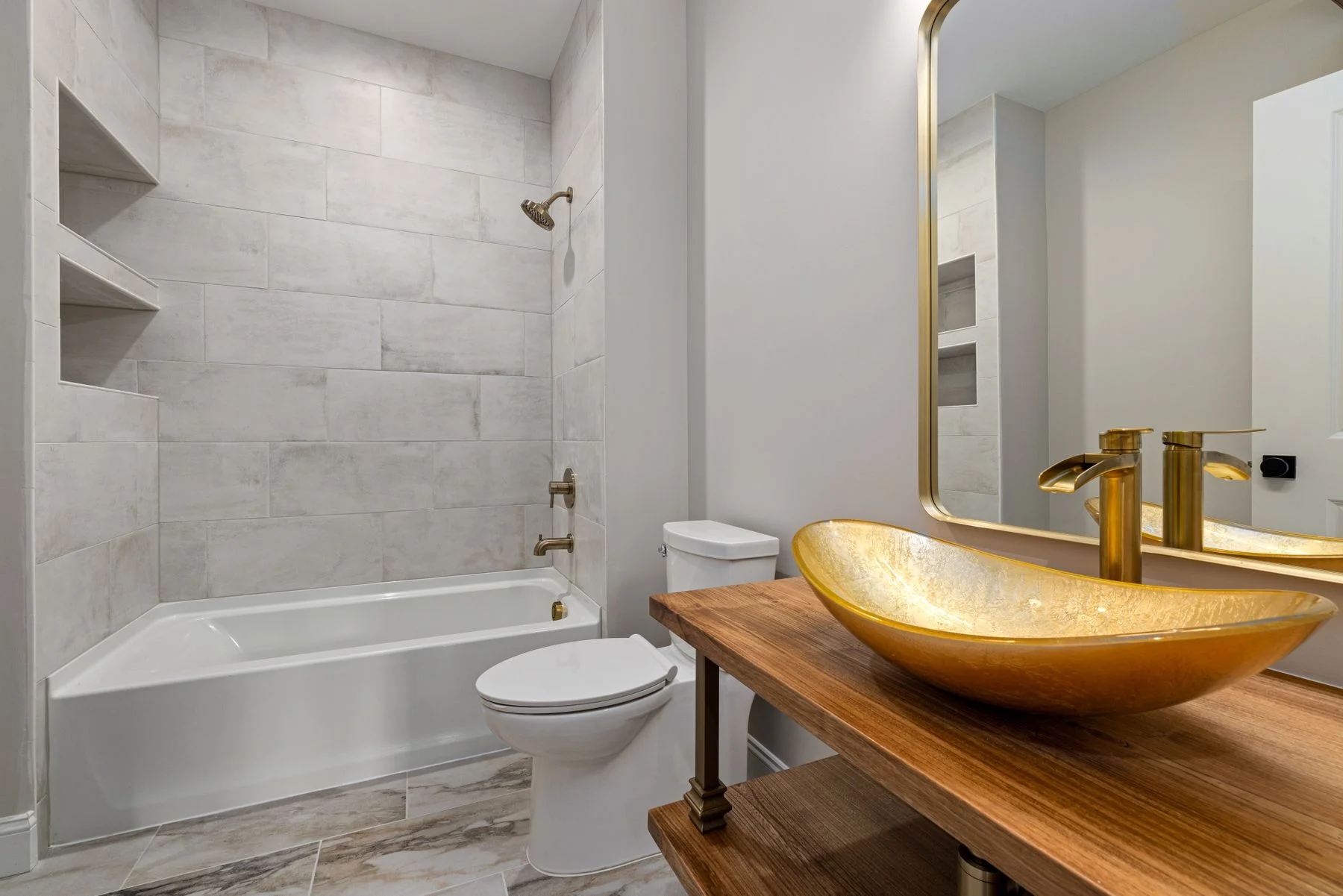
The basic difference in how they live in a room
A swinging door is hinged on one side and moves through an arc as it opens. That arc needs clear floor, and the door itself, when open, occupies a slice of the wall or blocks part of the room. A pocket door slides sideways along a track and disappears into a hollow space inside the wall, so it takes up no floor area when open and none when closed.
That sounds like an easy win for pocket doors, and in tight spots it often is. A small bathroom, a narrow hallway closet, a laundry nook or a pantry can feel noticeably more usable when a door no longer swings into the space. But a pocket door comes with its own requirements, and in many walls it is simply not possible without bigger changes.
The honest comparison is not which door is better. It is which door suits this opening, in this wall, with this traffic. A door that works wonderfully for a guest bath may be wrong for a busy kitchen entry or a bedroom where privacy and sound matter.
It helps to picture the door in use rather than in a drawing. Stand in the doorway with an armful of laundry, a tray of drinks or a sleeping child, and notice how you would open, pass through and close the door. Do the same from the other side. The door that feels natural in that moment is usually the one you will still like long after the novelty of a new design has worn off.
What the wall has to provide
A pocket door needs a wall cavity wide enough to hold the whole door when it is open, plus a frame that supports the track and keeps the door aligned. That usually means the wall is built from the start with a special pocket frame, or an existing wall is opened and rebuilt around one. The framing is different from an ordinary doorway, and the finish drywall must be installed so that it never interferes with the sliding door.
Because the cavity must be empty, the wall cannot carry wiring, plumbing pipes or ducts through the pocket area. Outlets and switches near a pocket door are placed carefully, and walls with services inside may need rerouting. A swinging door, by contrast, mounts to a regular frame and works in nearly any wall that can hold a standard opening.
If a wall is load bearing, widening or altering an opening is a structural planning question. Do not assume the wall can be opened. Ask your contractor to confirm what the wall carries before you plan a new pocket door or a wider doorway. Our interior doors and trim page describes how openings are planned and finished.
The casing around the opening is part of the wall system as well. A pocket door frame is usually finished with trim only on the visible side, and the edge where the door disappears needs a clean, slim detail. Ask to see how the trim will be handled, because a pocket door with clumsy trim can look more awkward than a plain swinging door in a simple frame.
Floor space and furniture layout
Space is the main reason people choose pocket doors. A swinging door needs roughly its own width in clear floor for the arc, and furniture, toilets, vanities and cabinets must stay out of that area. In a small bathroom, a door that swings in can force the whole layout into awkward compromise, while a pocket door lets fixtures sit where they work properly.
Swinging doors can still be arranged sensibly. Flipping the hinge side, changing the direction of the swing or hanging the door to open against a wall can recover some space. Sometimes a door that swings outward into a hallway solves the problem, although it may bump into traffic. Think through how people move before you decide.
Also consider the wall space beside the opening. A pocket door needs a stretch of wall clear of cabinets and large furniture on the side where the door slides, because pulling the door open must not collide with anything. Our guide on small bathroom ideas shows several layouts where door choice changes what fits.
A related option sits between the two: a surface mounted sliding door that rides on a track on the wall, often called a barn style door. It needs no pocket and no floor swing, but it needs wall space beside the opening and does not seal well for sound or privacy. It can suit a closet or a pantry, though it asks for the same clear stretch of wall that a pocket door does.
Hardware, tracks and the feel of use
The feel of a pocket door depends on its hardware. A sturdy track and quality rollers allow the door to glide silently, while a flimsy kit can rattle, stick or jump the track. Because the hardware is hidden in the wall, repairing it can mean opening the wall, so it is smart to spend attention on it at the start.
Handles and latches are different too. A pocket door needs a flush pull so the door can retract fully, and the lock options differ from a standard knob. Privacy locks for bathrooms and bedrooms are available, but they usually feel different from a conventional latch. Test one in person if possible.
A swinging door has simpler hardware that is easy to see and adjust. Hinges can be tightened, latches replaced and a sagging door reshimmed. Our guide to door styles and hardware covers finishes, handles and hinge choices, which matter just as much for appearance as for function.
Weight deserves attention too. A solid wood or glass door is heavy, and a heavy pocket door puts real strain on the track and the frame above it. If you love a substantial door, tell the contractor early so the hardware can be chosen for the load instead of discovered to be too light after the wall is closed.
- Ask what track and roller system is planned and whether the door can be adjusted later.
- Ask how the door will be removed if the hardware ever needs service.
- Check that the flush pull and lock suit the room, such as a bathroom or bedroom.
- Look at the door weight, since heavy solid doors need stronger tracks.
- Confirm the finished opening width works for your needs, including mobility.
Sound, privacy and sealing
Swinging doors close against a stop and often with weatherstripping or a threshold, which helps with sound and light. A pocket door slides past a frame without a stop that seals tightly, so gaps at the edges are common. For a closet or pantry, that is rarely a concern. For a bedroom, a home office or a bathroom, noise and light leakage can be noticeable.
If privacy matters, ask what options exist for seals and brushes on a pocket door and how well they work in practice. A solid core door is quieter than a hollow one, and a thicker door has more mass to block sound. These choices apply to both types.
Think about doors in terms of what happens behind them. A door to a laundry room that hides noise from a washer is worth treating more seriously than a door to a linen closet. Our guide on managing dust and noise is about construction, but its thinking about sound paths helps with door choices too.
One simple trick is to rank the rooms by how much you care about privacy. A guest bath, a primary bedroom and a home office usually rank high, while a pantry or linen closet ranks low. Put the better sealing swinging doors where privacy ranks high and consider pocket doors where space is tight and sound matters less. That small exercise settles many door decisions with very little effort.
Moisture, humidity and South Florida conditions
Humidity affects doors. Wood absorbs moisture and can swell, which makes swinging doors stick in their frames and pocket doors drag on their tracks. In a bathroom, steam can reach a door and the wall around it, so materials and finishes should be chosen for damp conditions. Proper ventilation reduces the problem for both types.
A pocket door lives inside a wall cavity that can hold humidity, and hidden moisture can affect the frame and the track over time. Ask how the cavity will be protected and whether the wall near a bathroom needs extra care. A swinging door is visible and easier to inspect and repair.
If a door sticks only in wet weather, the cause may be humidity rather than a hardware problem. Our page on sticking sliding doors describes how to tell the difference, and how to explain what you notice when you talk to a contractor.
Salt air near the coast adds another wrinkle. Metal tracks, hinges and screws can corrode if the finish is poor, and corrosion makes doors stiff and noisy. Ask about hardware finishes suited to a damp, salty environment, and keep in mind that interior doors near sliding glass openings or bathrooms may see more moisture than doors deep inside the house.
Accessibility and aging in place
Doorways matter for anyone who uses a walker, a wheelchair or a cane, or who carries bulky items. A swinging door can be awkward in a narrow room because the user has to back up to open it. A pocket door removes the arc, which can help a person maneuver, but its hardware and pull must be easy to grasp and operate.
Lever handles are often easier for people with limited grip strength than round knobs, and a wide opening helps everyone. Doorway width is a planning question that affects framing, trim and sometimes the layout of the room beyond. Do not assume that a pocket door automatically gives a wider clear opening, since the door itself and its hardware can take up some width.
If you are planning for the long run, ask a contractor to talk through the options. Our page on aging in place remodeling and the guide to accessible home features cover door width, handles and clear floor space.
Think about the next stage of life as well. A door that is perfect today can become difficult if someone's strength, balance or vision changes. Choosing handles you can use with a closed hand, wide openings and doors that stay where you put them costs little at the planning stage and can save a more disruptive change later. It is worth discussing openly, even if you do not need the features right now.
Appearance and style
Swinging doors offer more variety. Paneled, flush, glass, louvered and French styles all suit different homes, and the casing and trim around a swinging door can become a design feature. A swinging door also helps a room feel finished, particularly when the door is a visible part of the architecture.
Pocket doors are quieter visually. When they are open, there is no door to look at, and when closed they present a flat panel. This clean look fits modern rooms, but it can suit traditional homes too, especially with paneled doors that match the rest of the house.
Whichever you pick, match the door style to the rest of the home. Mixed styles throughout a house can look random, and our guide on whole home color and material flow explains how to keep openings and finishes consistent from room to room.
Finish color deserves a moment. White doors with white trim give a calm, unified look, while stained wood or painted dark doors become a feature. A pocket door is usually seen as a flat panel, so the color and the surface texture are what the eye notices. Test paint and sheen samples on the door itself, and read our paint sheen guide for how finish level affects what you see and how it cleans.
Installation, repair and what to expect
Installing a swinging door in an existing frame is a familiar task. Installing a new pocket door usually means opening the wall, framing the pocket, setting the track, closing the drywall, then finishing and painting. The extra steps bring more mess and more coordination, and they should be shown in the scope.
If the wall holds services, plumbing and electrical work may have to be rerouted, which can bring in a specialist trade under the company's coordination. Anything found behind the wall pauses the work and comes to you as a written change order with a price before it proceeds. Permits are pulled where the work requires them, and your city building department can tell you what applies.
Repairs also differ. A swinging door can be adjusted at the hinge. A pocket door with a failing track may mean opening a section of the wall. Ask about access: some systems allow the door to be lifted out for service without wall demolition. That detail deserves a direct question.
Cleanliness during the work is worth planning for. Opening a wall creates plaster dust, and dust can travel into the neighboring rooms. The site is cleaned at the end of each working day, and you can help by clearing furniture and covering belongings near the opening. At the end of the job, the punch list is walked together before final payment, which is the moment to test every door under real use.
A short way to choose
Begin with the opening. Measure the clear floor on each side and note what is in the way of a door arc. Then check the wall: what does it contain, and is it load bearing? Your contractor can help with that. Our renovation measurements checklist explains what to measure and photograph.
Next, think about sound, privacy and moisture in the room behind the door. A pocket door shines in a pantry or a compact bath. A swinging door often wins in a bedroom, an office or any room where sealing matters. Mix them where it makes sense, because a home does not need all one type.
Finally, ask for the choice to be written into the scope with the hardware named. If you are redoing a larger area, our interior renovation page shows how door changes fit alongside walls, floors and finishes.
Common questions
Can any wall take a pocket door?
No. The wall needs a cavity wide enough for the door and empty of wiring, pipes and ducts, and it must not be load bearing unless a structural solution is designed. Existing walls often have to be opened and reframed. A contractor can inspect the wall and tell you whether a pocket door is practical.
Are pocket doors harder to repair?
They can be, because the track and rollers sit inside the wall. Some systems allow the door to be lifted out for service, and others require opening drywall. Ask which system is planned and how it can be accessed later, so a future repair does not turn into a surprise project.
Do pocket doors seal as well as swinging doors?
Usually not. They slide past a frame instead of closing against a stop, so gaps for sound and light are more common. That matters most for bedrooms, offices and bathrooms. A solid core door and brush seals can improve things, but a swinging door is typically better at sealing.
Will a pocket door give me a wider opening?
Not automatically. The door and its hardware can take up some of the opening, so the clear width may be smaller than it looks. If accessibility matters, ask for the clear width to be stated in the scope, and consider lever handles and easy to grasp pulls.
Does humidity affect pocket doors?
Yes. Wood can swell in humid weather and cause drag or sticking, and wall cavities can hold moisture. Bathrooms need good ventilation and materials chosen for damp conditions. If a door sticks only in wet weather, tell your contractor so they can look at humidity before suspecting the hardware.
Can I change a swinging door to a pocket door myself?
This is not a project to attempt on your own. It involves opening a wall, possibly rerouting services and checking whether the wall carries load. Bring the idea to a walkthrough so the wall can be examined, the scope written and any required permits identified through your city building department.