The idea behind an allowance
Renovations rarely begin with every decision made. You may know that you want new tile in the bathroom, but not which tile. You may know that the kitchen needs a faucet and lighting, but not which style. An allowance lets the scope and the price move forward anyway, by reserving an amount for those items until you choose.
The amount is a stand in. It represents what the contractor expects a reasonable product in that category to cost, and it is written into the scope as a specific line. When you pick the actual item, the real cost replaces the placeholder. If your choice costs less, the difference comes off the total. If it costs more, the difference is added.
Nothing about this is unusual, and it is not a sign that anyone is hiding something. Almost every home project of any size includes a few items that cannot be priced exactly until they are picked. The question is only whether the paperwork handles them clearly. Seen this way, an allowance is a tool for honesty. It admits that something remains undecided and puts a number next to it, instead of burying the uncertainty. The danger is not the tool itself but a number that was chosen without care, which is why the rest of this guide is about reading and managing allowances closely.
Allowances are different from contingency. An allowance is for a known item that simply has not been selected, such as a tile or a fixture. A contingency, where a household chooses to keep one, is a reserve for the unexpected. Mixing the two up is a common source of confusion, so ask your contractor to keep them clearly separate in the scope and in any running totals.
What an allowance should cover
Start by asking what the allowance includes. In some scopes it covers only the product at the supplier, while in others it also covers delivery, sales tax, trim pieces, installation materials and even labor beyond the standard. These differences change how far the amount stretches, so they need to be stated in the scope rather than guessed.
Think about tile as an example. An allowance for tile might cover the tile itself, but the setting materials, the grout, the edge trim, the waterproofing and the labor to install might be separate lines that are already priced. Or a single allowance might fold several of those together. Neither is wrong, but you should know which one you are looking at. Write the answer beside the line in your copy of the scope, so that months later, when a bill arrives for setting materials or trim, you can see right away whether it was inside the allowance or priced separately. Memory fades, but a note beside the line does not.
Ask for allowances to be expressed in the same unit you will use when you shop. If the allowance is a lump sum for a bathroom floor, you cannot easily tell whether it matches the floor you like. If it is stated per square foot of a product category, shopping is much more direct. Clear units let you compare an actual selection to the placeholder without arithmetic puzzles.
Waste and extra material are another detail. Tile, flooring and paint are ordered with some extra to cover cuts and mistakes, and that extra has to be paid for somewhere. Ask whether the allowance accounts for it or whether the contractor adds it separately, so a floor that fits on paper still fits once the real quantity is ordered.
- Ask what the allowance covers: product, delivery, tax, trim and labor.
- Ask whether the amount is a lump sum or tied to a unit of measure.
- Ask what category of product the amount was set for.
- Ask who adds up the final selection against the allowance.
How an allowance is set
A responsible allowance is based on the kind of product that matches the rest of the job. A mid range kitchen with standard cabinets is not well served by an allowance sized for an entry level faucet and a luxury sink at the same time. The contractor should be able to explain how each number was chosen and what level of product it represents.
If you already have a sense of what you want, say so during the walkthrough. Showing photographs, samples or product names allows the allowance to be set closer to reality. If you are still unsure, ask for examples of what the allowance would buy, so you can judge whether it is generous, snug or too thin. Visiting a showroom together, even for a short stop, can make the numbers feel real and prevent the common surprise of falling in love with something far outside the placeholder.
Be careful about allowances that look attractive because they are low. A low allowance can make a fixed price seem smaller, but the difference simply moves to you later when you choose items that cost more. The better question is not whether the number is small, but whether it is realistic for the style you have in mind.
How your selections move the numbers
Every selection has a price, and the price is compared to the allowance. When the item costs less than the allowance, the unused portion usually comes off the total. When it costs more, the extra is added. The scope should say how that adjustment is calculated, including whether any markup or handling applies to the difference.
Selections also have secondary effects. A larger format tile may need more careful preparation of the floor. A heavier countertop may need additional support. A faucet with a different mounting type may require a different hole pattern or plumbing adjustment. These knock on effects can appear as new line items beyond the allowance itself.
This is why it helps to go over selections with your contractor before you buy. Ask them to look at the product information and tell you whether it fits the plan and the allowance. Our kitchen selections checklist and bathroom selections checklist are built to support that conversation.
Supplier details matter as well. Some products are available only through certain showrooms or distributors, and the price you see may not include delivery or handling. Ask who will place the order, who will receive and inspect the delivery, and what happens if a piece arrives damaged. Those details are easier to settle before the money is spent than after the box is opened.
Tracking allowances in a simple sheet
You do not need software to track allowances. A single page works well. List each allowance in a row, with columns for the scope amount, the product you are considering, its actual cost, the difference and the date you decided. Update it as soon as you choose or change an item, and share it with your contractor so both versions match.
Add a column for extras tied to the selection, such as extra trim, a different mounting kit or a special order fee. Those items often arrive late in the process, and a column for them keeps them visible. It also reminds you to ask, before you buy, whether a product needs anything else to be installed correctly.
Look over the sheet at regular points, such as after each major selection and before each payment. If the totals are drifting, you can make a deliberate choice, such as saving on one item to spend on another. Doing this early, while orders are still open, beats discovering the total at the end.
Bring the sheet to meetings with your contractor and agree on a single version. If you each keep a private list, the two will drift apart, and the differences will surface at the worst moment. A shared sheet turns allowances into a regular, friendly check in, which is far better than a tense conversation about numbers on the last day.
Decision deadlines and ordering
Allowances come with timing. Many products must be chosen and ordered well before the installation date, and a late decision can hold up other trades. A good scope or schedule shows when each selection is needed, and you should plan your shopping around those dates.
Lead times vary by product, supplier and season, and we do not put a number on them here. What we can say is that special orders take longer than in stock items, and the difference can surprise people. Our guide to lead times and ordering explains why this matters and how to ask the right questions.
Coordinate the dates with deliveries and with storage. Products that arrive early need a dry, safe place to wait, and products that arrive late can stop a crew. Ask your contractor which items are time critical for your project and which can be chosen later, so you spend your attention where the schedule needs it most.
If you miss a deadline, talk with your contractor right away. A delay in selection can lead to a delay in work, and in some cases to a revised price or schedule. This is a normal part of the process, but it goes better when the conversation begins early and the changes are put in writing.
Plan your decisions in an order that follows the work. Items that affect the structure or the layout, such as a shower valve location or the placement of a range, usually come first. Finishes that sit on top of the structure, such as paint colors and hardware, can come later. Following the order of the work keeps your decisions from forcing a redo of something already built.
When an allowance runs over
Sometimes the item you love costs more than the allowance. That is not a failure. It is a choice with a visible cost. The adjustment should arrive in writing before you place the order, showing the allowance, the actual cost and the difference. You then decide whether to keep the item, pick another, or adjust somewhere else.
If an overage surprises you, ask for the paperwork behind it. You should see the product information, the pricing and an explanation of any related work that changed. If something seems unclear, ask the contractor to walk you through it. A calm talk usually clears things up, and it helps you trust the numbers.
Some overages come not from the product but from the surrounding work, such as extra preparation or changes to plumbing. Those usually appear as a change order, not as an allowance adjustment. Our guide to change orders explained describes how those documents should look and why they must be approved before work proceeds.
When an allowance comes in under
The good news is that some selections cost less than expected. When that happens, the savings should be credited against the total, as the scope describes. Ask how and when the credit appears, whether it is shown on a running statement or in a final adjustment, and whether it is available to move to another item.
Think about whether to spend the difference elsewhere. A modest savings on lighting might allow a better quality faucet, or a step up in tile for the shower. Because decisions interact, it helps to look at the whole list of allowances together instead of treating each in isolation.
Keep a record of credits and keep it consistent with the written scope. If your selections come in under and the final paperwork does not show the credit, ask for an explanation. Clear accounting works in both directions, and a contractor who is organized will welcome the question.
Do not forget the opposite situation, where you want to supply an item yourself. Buying a fixture or tile outside the contract can save effort, but it changes who is responsible for timing, damage and fit. Talk it through first, and ask that the scope say clearly what is owner supplied and who inspects it on arrival so there is no question later.
Allowances in different rooms and trades
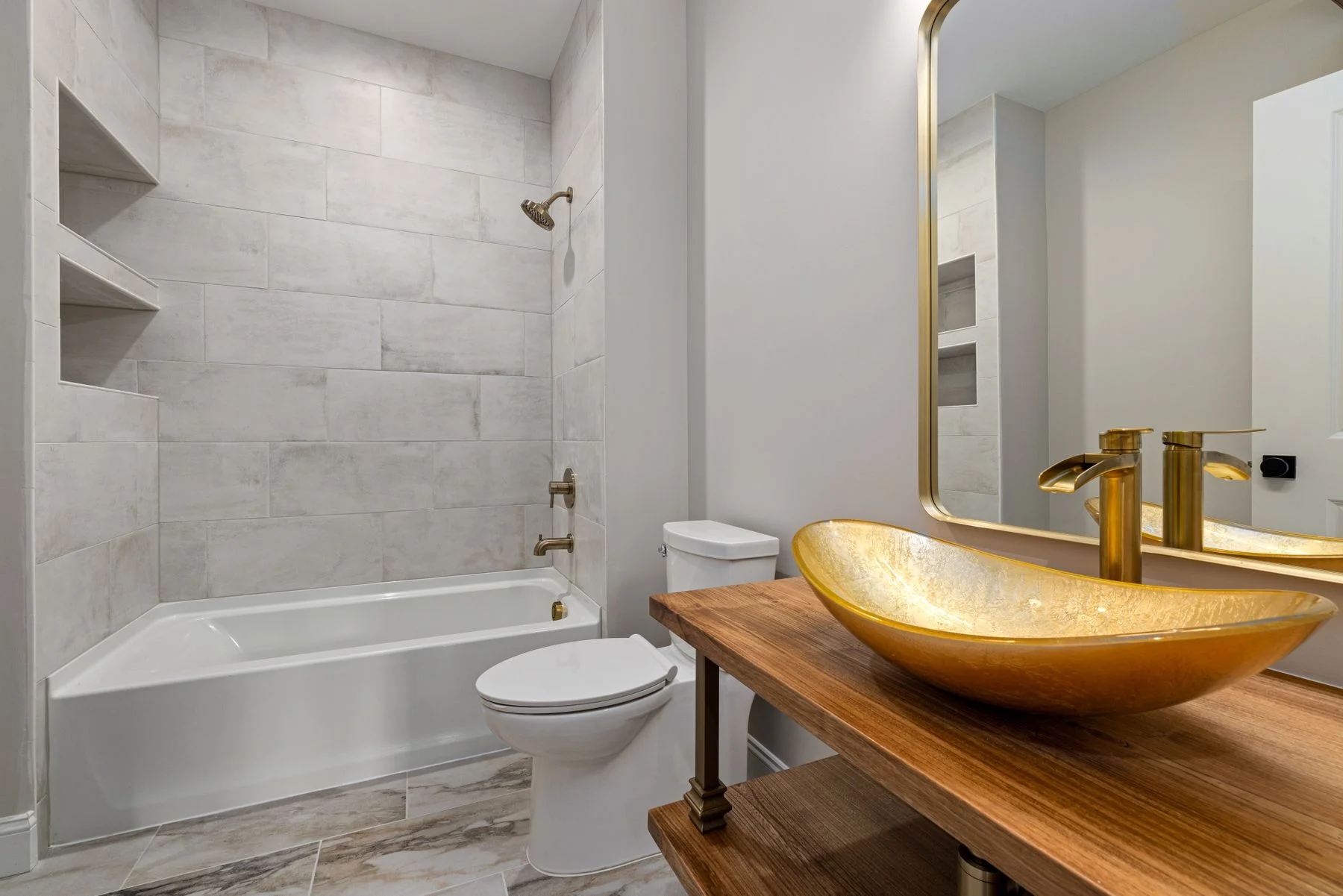
Kitchens often carry the largest number of allowances, because they involve cabinets, counters, backsplash, fixtures, lighting and hardware. Bathrooms commonly carry tile, plumbing fixtures, vanity, mirror and accessories. Flooring projects may include an allowance for the material itself. Windows and doors usually have fewer allowances, since they are ordered to a specific size and type.
Think about the trades that rely on your selections. The tile setter, the plumber, the electrician and the painter all need information about your choices to prepare. A late or changed selection can ripple through several schedules, so be thoughtful about when and how you decide.
Our selecting fixtures and finishes guide offers a way to organize those decisions, and our kitchen remodeling page shows how a larger project is structured. If you are planning more than one room, our multi room project phasing page can help you decide what to choose first.
Whole house projects need extra care with allowances because the same decision can repeat in several places. Choosing a door style, a baseboard profile or a light fixture for one room often sets the pattern for others, and the totals multiply. Decide the repeating items once, write down the choice and the amount, and carry it through every room so the pattern stays consistent and the sheet stays simple.
How we handle allowances in practice
Every project begins with a walkthrough and a written scope that states what is included and what is not. If an allowance is part of the scope, the document should name it, say what it covers and describe how the final adjustment is calculated. A fixed price is set against that scope before work begins.
You will have one point of contact from estimate to punch list, so questions about selections and totals have a clear place to go. If a selection requires additional work, the difference arrives as a written change order with a price before anything proceeds, and the site is cleaned at the end of each working day.
For more on reading these documents, see our guide to reading a written scope of work. And when you are ready to talk through a project, a walkthrough is where the allowances, the selections and the schedule all start to fit together.
Common questions
What is a renovation allowance?
An allowance is a placeholder amount in the scope for an item you have not chosen yet, such as tile or a faucet. When you pick the actual product, the real cost replaces the placeholder and the total is adjusted up or down. The scope should explain exactly how that adjustment is calculated.
What should I ask about an allowance before signing?
Ask what it covers, whether it includes delivery, tax, trim and labor, what level of product it represents, and how the final adjustment is handled. Also ask when you must make the selection. Having these answers in writing keeps the allowance understandable from the first day to the last.
Why might an allowance be set too low?
A low allowance can make a fixed price look smaller while shifting the real cost to the moment you choose products. It may be set for a very basic item that does not match your taste. Ask for examples of what the allowance would buy and compare them with what you like.
What happens if my choice costs more than the allowance?
The difference is added to the total, and it should be shown in writing before you order, including the allowance, the actual cost and any related work. You can then keep the choice, select something else or balance it against savings elsewhere. Nothing should be ordered before you agree.
What if I choose something that costs less?
The unused portion should be credited to the total as the scope describes. Ask how and when the credit is shown and whether you can apply it to another selection. Keep your own tracking sheet so the final accounting matches what you expect.
Do allowances affect the schedule?
They can. Many selections must be made and ordered before related work starts, and special orders take longer than stock items. Ask for a list of decision dates and plan your shopping around them. If you miss one, tell your contractor early so any schedule change is discussed in writing.